Table of content

Figuring out how much concrete you need isn’t always as simple as it sounds. Whether you’re pouring a driveway, patio, shed base, or small foundation, getting the right concrete volume saves money, time, and wasted material with our Concrete Calculator.
Using the Concrete Calculator takes less than a minute. Just enter your measurements and get the total concrete volume instantly.
Enter the length and width of your slab, patio, driveway, or foundation.
You can input the values in feet, meters, or inches depending on your project.
Enter the thickness (depth) of the concrete.
For slabs, this is usually entered in inches or feet. Make sure the depth matches your actual pour thickness.
Select your preferred unit of measurement.
The calculator can convert automatically and display results in cubic yards, cubic feet, or cubic meters.
Click “Calculate.”
The tool will instantly show:
Total concrete volume required
Estimated number of concrete bags (based on standard bag sizes)
That’s it. No manual conversion, no dividing by 27, no guessing how many bags you need.
Whether you’re planning a small DIY pour or pricing out a larger job, this Concrete Calculator gives you a quick, practical number you can actually use. Enter your dimensions, hit calculate, and you’ll get the concrete volume you need—without manual conversions or guesswork.
Slabs and flat pours: patios, walkways, driveways, shed bases, and garage floors. Just plug in length, width, and thickness to get the required concrete volume.
Foundations and footings: estimate concrete for base sections that run in strips or trenches, so you can plan materials before placing an order.
Walls and columns: calculate vertical structural parts by size, then combine totals to estimate the full project volume.
Order-friendly units: see results in the units commonly used for ordering ready-mix, with easy conversion for metric projects as well.
Bag estimates for small jobs: if you’re mixing by hand, it can estimate how many bags you’ll need—and it’s smart to round up to avoid coming up short mid-pour.
Basic cost planning: once you have the volume, you can multiply by your local price per unit to get a rough budget number before requesting quotes.
Conclusion: In short, this calculator covers the most common concrete shapes and planning needs—so you can move from measurements to a solid material estimate in minutes, then order or budget with more confidence.
After you click Calculate, the result is usually shown in a few practical formats so you can order materials without extra math.
This is the total space your concrete needs to fill based on the dimensions you entered. Concrete is measured by volume, even if you’re buying bags.
Cubic yards (yd³) are commonly used for ready-mix ordering in the US.
Quick check: 1 yd³ = 27 ft³.
Cubic meters (m³) are common in metric projects.
Useful conversion: 1 m³ ≈ 1.31 yd³.
If the result looks “too small,” thickness is usually the issue—people type inches but expect the tool to treat it like feet. A typical example is converting 4 in into 0.333 ft before multiplying.
If you’re mixing by hand, the calculator can convert volume into an estimated bag count.
Common planning benchmarks:
1 yd³ ≈ 45 bags of 80-lb concrete
1 yd³ ≈ 60 bags of 60-lb concrete
Bag yield varies by brand and mix, so if your number lands close to a cutoff, it’s safer to round up rather than risk running short mid-pour.
Real pours rarely match perfect math—forms flex, ground isn’t perfectly level, and some spillage is normal. That’s why adding 5% to 10% extra is common.
A simple way to apply it:Final volume = Calculated volume × 1.05
(Or × 1.10 if you want a larger safety margin.)
Once you have the volume, cost is straightforward: concrete is usually priced per unit volume (often per yd³ for ready-mix). Depth makes a big difference—going from 4 in to 6 in increases the volume (and cost) a lot.
Also keep in mind that real quotes may include extras like minimum load fees, delivery distance, and timing.
When people talk about a “concrete calculator formula,” they’re really talking about simple volume math. There’s nothing complicated here. Concrete doesn’t care about brands or tools — it only cares about how much space it needs to fill.
At its core, every concrete estimate starts with one question:
How much volume does this shape take up?
Once you know that, everything else — yards, bags, and cost — falls into place.
For most everyday projects like slabs, patios, sidewalks, or floors, concrete is poured into a rectangular shape. The formula is as straightforward as it gets:
Concrete volume = Length × Width × Depth
That’s it.
The key thing to remember is that all measurements must be in the same unit before you multiply them. In the US, this usually means feet. In the UK or SI-based planning, meters are common.
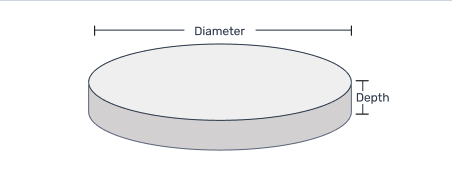
The amount of concrete you need always comes down to one thing: how much space you’re filling. Whether it’s a driveway, patio, shed base, or small foundation, concrete doesn’t change — only the shape and thickness do.
Most residential projects use simple shapes, which makes estimating concrete more predictable than people expect.
Depth is the part that often causes confusion. Concrete thickness is commonly measured in inches, but volume calculations work best in feet. For example, a 4-inch slab becomes:
4 ÷ 12 = ⅓ ft
So if you’re pouring a patio that’s 12 feet long, 10 feet wide, and 4 inches thick, the math looks like this:
12 × 10 × ⅓ = 40 cubic feet
Concrete in the US is typically ordered by the cubic yard, so the final step is converting:
40 ÷ 27 ≈ 1.48 cubic yards

In practice, most people would round that up and allow for a small margin, ending up with about 1.6 cubic yards of concrete.
Smaller projects often use concrete bags instead of ready-mix trucks, but the logic stays the same. Once you know the cubic yard total, you can estimate bags easily. On average, one cubic yard equals about 45 bags of 80-lb concrete or 60 bags of 60-lb concrete. That same patio would need roughly 70–75 bags, depending on bag size.
Round concrete areas, like post bases or circular pads, follow the same idea but use a different shape formula:
Volume = π × Radius² × Depth
After that, the volume is converted the same way — cubic feet to cubic yards, then to bags if needed.
One important thing to keep in mind is that concrete jobs rarely go perfectly to plan. Ground isn’t always level, forms can flex, and small spills happen during pouring. That’s why experienced contractors usually add a small buffer to the calculated volume. For most projects, 5% to 10% extra concrete is considered normal.
Final volume = Calculated volume × 1.05
That extra amount is usually cheaper than stopping mid-pour because you ran short.
⚠️ Note
These estimates assume even depth and standard conditions. Sloped areas, steps, or footings should be calculated separately and added together for a more accurate total.
Once you know how much concrete you need, estimating cost becomes much easier. Concrete pricing isn’t fixed, but it usually follows a clear pattern based on volume.
In the US, ready-mix concrete is commonly priced per cubic yard, while in the UK smaller projects often rely on bagged concrete or quotes by cubic meter. The numbers vary by location, but the way pricing works stays mostly the same.
Thickness has a big impact on cost. A slab poured at 6 inches thick uses 50% more concrete than a 4-inch slab, which can noticeably change the final price for driveways, patios, or garage floors.
Most estimates also include a small allowance for waste. Concrete can be lost to uneven ground, form movement, or small spills during pouring. That’s why adding 5% to 10% extra is common practice.
Final volume = Calculated volume × 1.05
That buffer usually costs less than stopping a pour to order more material.
It’s also worth remembering that concrete cost isn’t just about the mix itself. Delivery distance, minimum load fees, and timing can all affect the final quote, especially for ready-mix orders.
Concrete and cement are often used interchangeably in everyday conversation, but in construction, they are not the same thing. Mixing them up is one of the most common reasons people miscalculate materials.
Cement is only one ingredient in concrete. On its own, cement is a fine powder. It becomes concrete only after being mixed with water, sand, and aggregates like gravel or crushed stone.
In simple terms:
Concrete = cement + sand + aggregate + water
Cement = binding material inside concrete
This difference matters when estimating materials. A cement calculator is designed to estimate cement content only, often for mix design or material ratios. It does not tell you how much finished concrete you’ll get, and it can’t be used to calculate slab volume, pad size, or foundation pours.
Concrete isn’t a single material with one use. Different projects call for different types of concrete, depending on strength, setting time, durability, and exposure conditions. Below is a clear overview of the most common concrete types you’ll see in residential, commercial, and infrastructure work.
Plain concrete (normal concrete): Basic concrete without reinforcement. Often used for sidewalks, pathways, and simple slabs where strength demands are low.
Reinforced concrete: Concrete combined with steel rebar or mesh. Common for driveways, floors, foundations, and structural elements.
Ready-mix concrete: Mixed at a plant and delivered by truck. Popular for residential and commercial pours because it saves time and ensures consistent quality.
Precast concrete: Formed and cured off-site, then installed. Includes blocks, panels, steps, and drainage components.
High-strength concrete: Designed to handle heavier loads and stress. Used in structural slabs, columns, and commercial construction.
Lightweight concrete: Uses lightweight aggregates to reduce overall weight. Often used where load limits matter, such as upper floors.
Stamped concrete: Decorative concrete patterned to look like stone, brick, or tile. Common for patios, walkways, and outdoor spaces.
Colored concrete: Pigments are added to change appearance. Used where aesthetics are important without changing structure.
Fiber-reinforced concrete: Includes fibers to help control cracking and improve durability, especially in slabs and pavements.
Self-compacting concrete: Flows easily without vibration. Used for complex forms or heavily reinforced areas.
Pervious (permeable) concrete: Allows water to pass through. Common for driveways and areas needing better drainage.
ISO 80000-3: Quantities and Units – Space and Time
https://www.iso.org/standard/64973.html
ASTM C150 – Standard Specification for Portland Cement
https://dn721602.ca.archive.org/0/items/gov.law.astm.c150.2007/astm.c150.2007.pdf
Federal Highway Administration (FHWA) – Concrete Pavement Technology
https://www.fhwa.dot.gov/pavement/concrete
For most projects, one cubic yard of concrete equals:
The exact number can vary slightly by brand and mix, but these figures work well for planning. If you’re close to the limit, it’s usually safer to round up rather than risk running short mid-pour.
The math is accurate as long as your measurements are accurate. Most “wrong results” come from mixing units—especially entering thickness in inches but treating it like feet. Double-check length, width, and depth before you calculate.
Yes. You can use it online anytime to get instant concrete volume and bag estimates without signing up.
You can do it manually using basic volume math:
The formula looks like this: Cubic yards = (Length × Width × Depth) ÷ 27
As long as all measurements use the same unit, this method gives a reliable estimate.
In most cases, yes. Concrete jobs rarely use exactly the calculated amount. Small losses from uneven ground, form movement, or minor spills are normal.
Many contractors add 5% to 10% extra as a buffer:
Final volume = Calculated volume × 1.05
That small margin is usually cheaper than stopping a pour to reorder concrete.
A concrete yard calculation estimates the volume of finished concrete needed to fill a space.
A cement calculation estimates only the cement portion of a mix.
Concrete includes cement, sand, aggregate, and water. That’s why cement calculations can’t be used to estimate slabs, pads, or foundations on their own.
Most often it’s a thickness/unit issue. For example, 4 in must be treated as 0.333 ft if you’re calculating in feet. Also make sure you didn’t swap width and thickness.
For ordering, rounding up is smart—especially for ready-mix deliveries (minimum loads) and bag purchases (you can return unopened bags more easily than pausing a pour).
We build practical, easy-to-use online calculators that help people make smarter decisions with confidence. Our goal is to remove guesswork from everyday tasks by providing accurate, straightforward tools that anyone can use—no technical background required.
Concrete-calculator.net was created to support homeowners, DIY enthusiasts, contractors, and construction professionals in planning projects more efficiently. By delivering reliable volume and material estimates, our tool helps reduce costly mistakes, minimize material waste, and save valuable time on the job. We’re continuously improving our tools to ensure they remain helpful, up to date, and aligned with real-world needs.
Your privacy and trust are important to us. This Policy explains how we collect, use, and protect information when you use our website and tools, including Concrete-calculator.net. By accessing or using our services, you agree to the practices described below.
We only collect information that is necessary to operate and improve our tools. This may include basic technical data such as browser type, device information, and usage patterns. Any data you voluntarily provide—such as feedback or tool inputs—is used solely to deliver accurate results and enhance user experience.
The information we collect is used to:
Ensure accurate calculator functionality
Improve performance and usability
Understand how users interact with our tools
Maintain website security and reliability
We do not sell, rent, or trade personal information to third parties.
Our website may use cookies or similar technologies to analyze traffic and improve functionality. These tools help us understand general usage trends but do not personally identify individual users.
We take reasonable measures to protect your information from unauthorized access, loss, or misuse. While no online system can be guaranteed to be 100% secure, we are committed to maintaining a safe and reliable platform.
We may use trusted third-party services for analytics or hosting. These services are required to handle data responsibly and in accordance with applicable privacy standards.
We may update this Policy from time to time to reflect changes in our practices or legal requirements. Any updates will be posted on this page, and continued use of the site indicates acceptance of those changes.